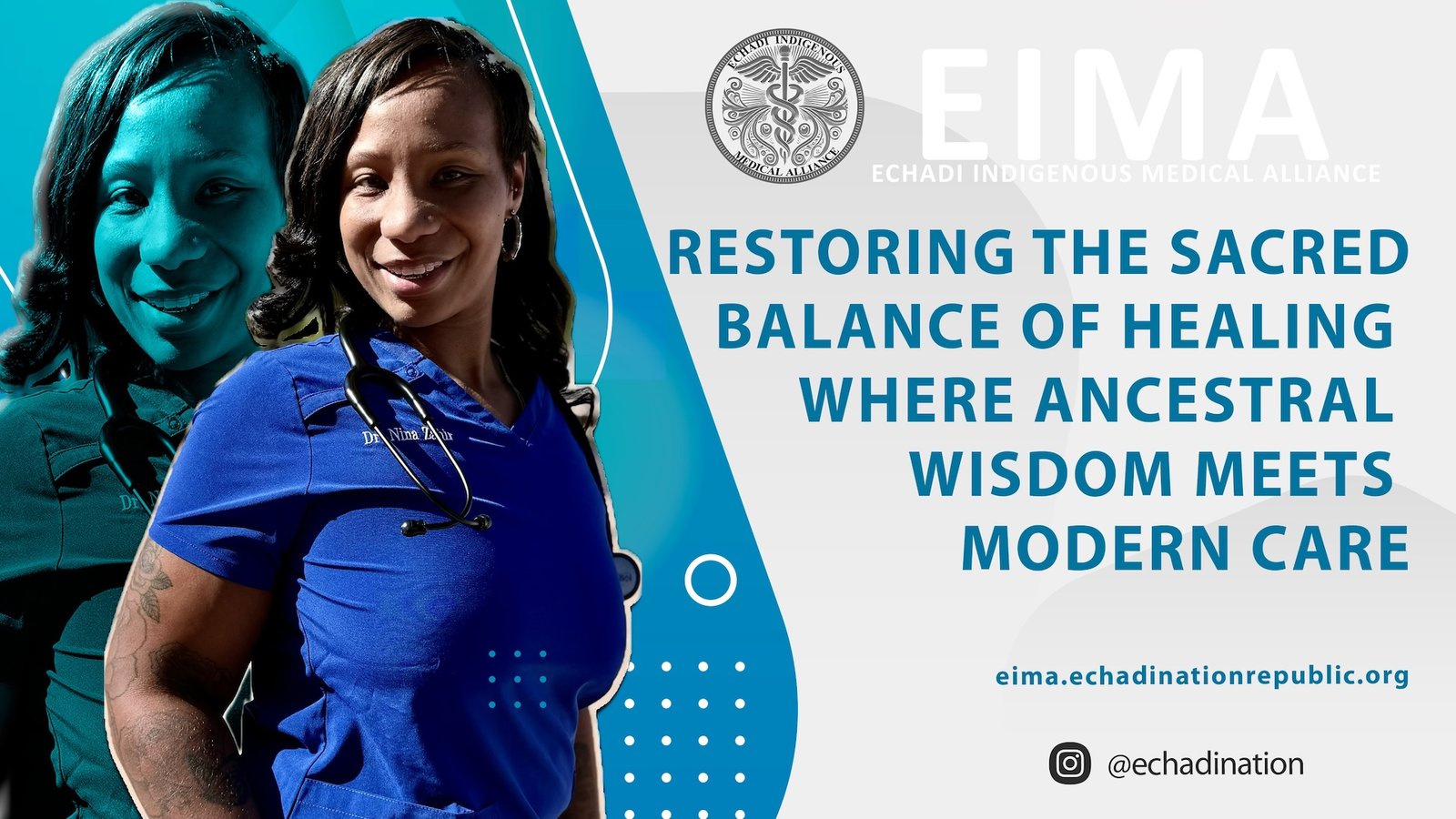
The Echadi Indigenous Medical Alliance (EIMA) has officially been launched as a member‑driven healthcare organization rooted in the sacred traditions and sovereignty of the Echadi Nation Republic. Embedded within its indigenous cultural framework, EIMA is positioned to deliver culturally responsive and holistic healthcare services under the oversight of the Nation’s Jural Society and ICC Board
Vision & Mission
EIMA aims to blend Indigenous medical wisdom with modern healthcare delivery, strengthening health sovereignty and self‑determination. Its vision centers on reinstating traditional healing practices, while addressing contemporary health disparities in Echadi communities
Key Features of the Alliance
- Sovereign Member‑Driven Governance: Guided by the Echadi Nation Republic’s ICC and Jural Society, EIMA ensures autonomy in decision‑making and healthcare policy
- Cultural Integrity in Care: Services are tailored to respect and honor Echadi healing traditions and values, offering a culturally holistic model
- Community‑Centered Approach: The Alliance is focused on serving local needs, promoting Indigenous leadership, and ensuring access for all members.
Why It Matters
EIMA’s launch represents a pivotal moment in strengthening Indigenous health equity and sovereignty. In many Indigenous communities worldwide, member-led models have shown powerful impacts—integrating tradition with evidence-based care to improve outcomes and trust. By taking a culturally grounded stance, EIMA is poised to serve as a model for Indigenous nations globally.
Benefits for the Echadi Community
- Integrated healing: Combining traditional practices with modern medicine.
- Empowered governance: Health policies are set by Indigenous leadership.
- Culturally safe environments: Respectful care built on shared values.
- Improved accessibility: Healthcare designed around community needs and traditions.
What’s Next?
EIMA is expected to launch pilot programs in various regions of the Echadi Nation Republic, including traditional healing centers, education initiatives, and outreach clinics. Future partnerships with international Indigenous health networks are also anticipated, aimed at knowledge exchange and broader advocacy.